
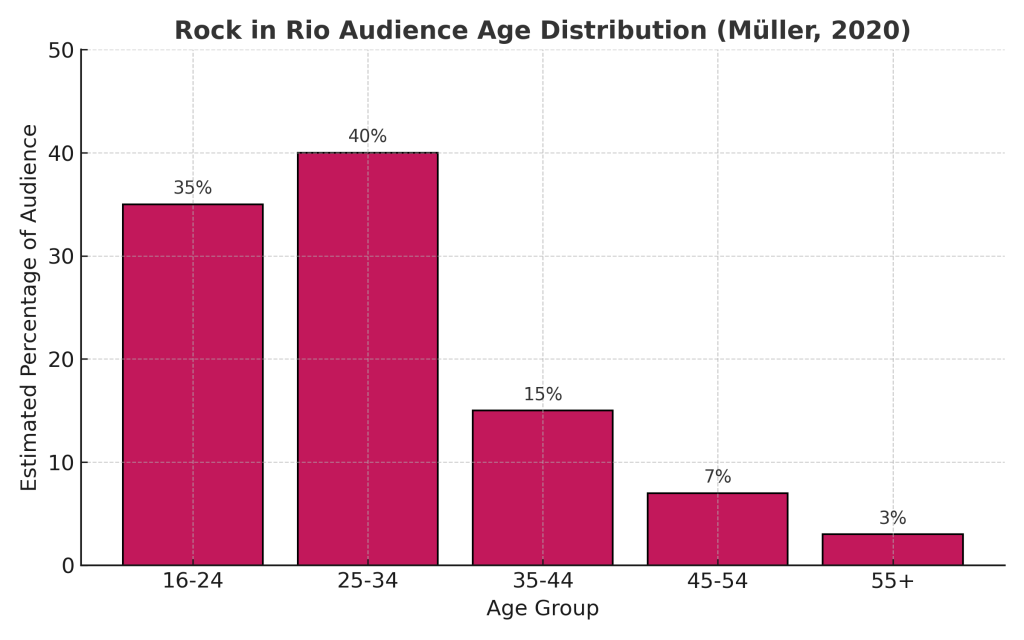
To ensure the design of the Rock in Rio website and companion app reflects real user needs, I created three detailed personas using verified age demographic research (Müller, 2020) and user commentary from platforms like Reddit and YouTube. The personas focus on individuals aged 18–35, which is the most dominant audience segment for Rock in Rio (see age chart). These personas represent a range of user behaviors, accessibility needs, and motivations for attending the festival.
USER PERSONA
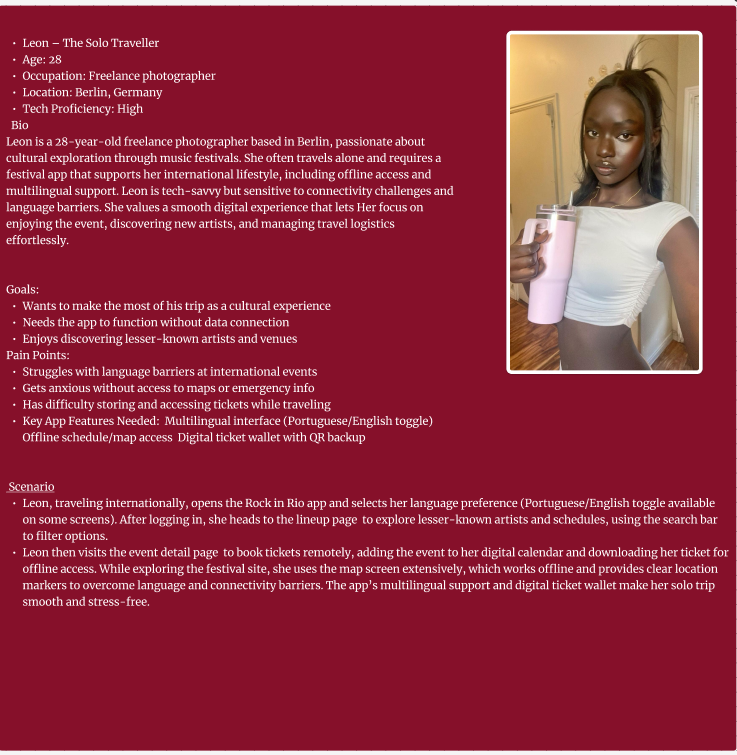
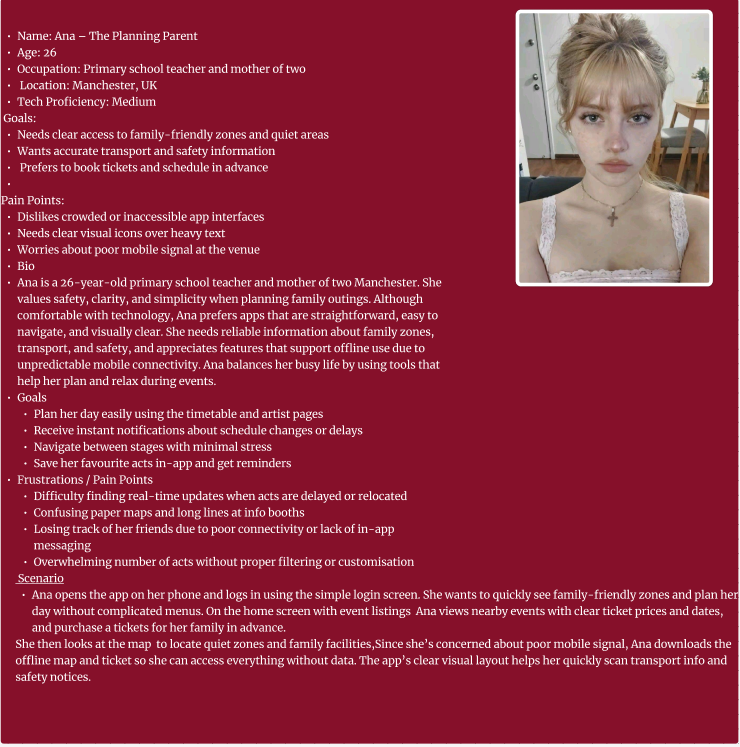
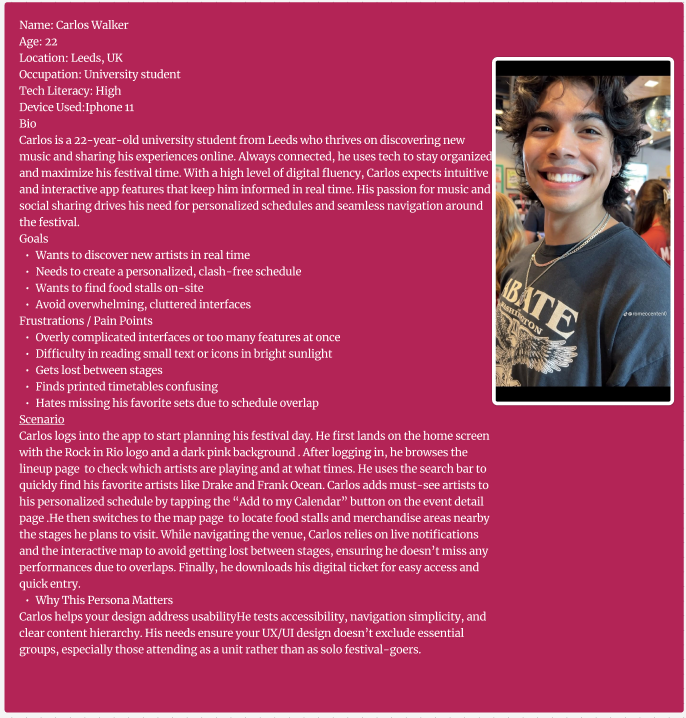
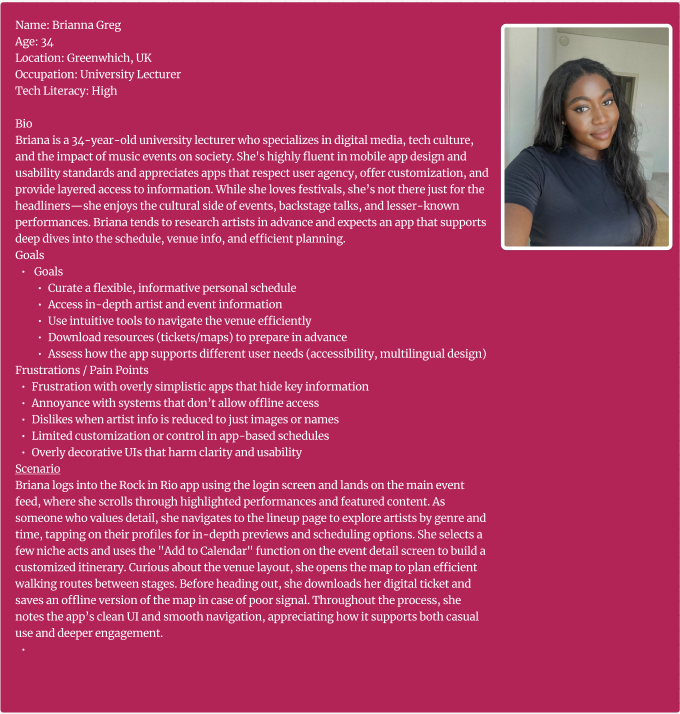
These personas allow me to simulate the accurate target audience of a major international music festival like Rock in Rio, consisting of people who enjoy live performances, cultural experiences, and large-scale social events. In order to better understand this audience, I developed a range of user profiles based on age demographics, behavioral research, and user commentary. Their feedback is crucial to the development of both the website and the companion app, as it offers first-hand insight into their expectations, habits, and accessibility needs—many of which I may not have considered without this process.
The core needs expressed by my users revolve around efficiently planning their experience, accessing tickets, discovering artists, navigating the festival grounds, and staying informed in real time. Features like personalized schedules, downloadable tickets, offline maps, and multilingual support are not just helpful—they’re essential. Since my audience includes a broad range of tech proficiency and lifestyle backgrounds, from tech-savvy students to family-focused parents and international travelers, the UI must remain clean, clear, and intuitive for all. One recurring concern across all personas is the potential for getting lost or overwhelmed, both at the venue and in the app itself. This insight reinforces the need for straightforward navigation, visual hierarchy, and accessibility-first thinking throughout the design process.
USER JOURNEY MAP
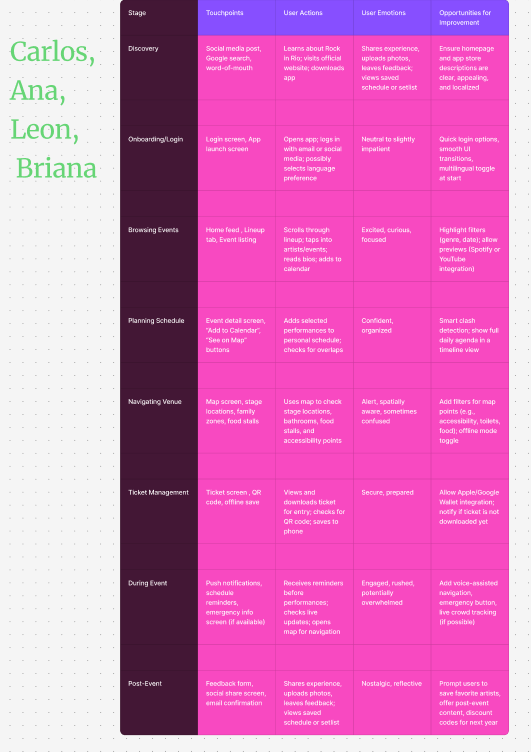
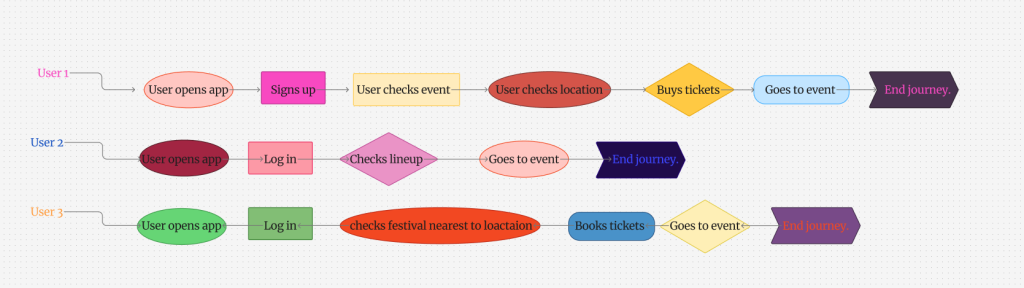
This user journey map is significant because it shows how actual people engage with the Rock in Rio website and app at every point of their festival experience, from planning and discovery to attending and reflecting. By charting user behaviour, feelings, and problems, I can determine where design changes are required and make sure the app stays user-friendly, accessible, and helpful all the way through. Prioritising important features like offline access, schedule customization, and navigation tools also helps me make sure the finished product offers a flawless user experience.
STAKEHOLDER
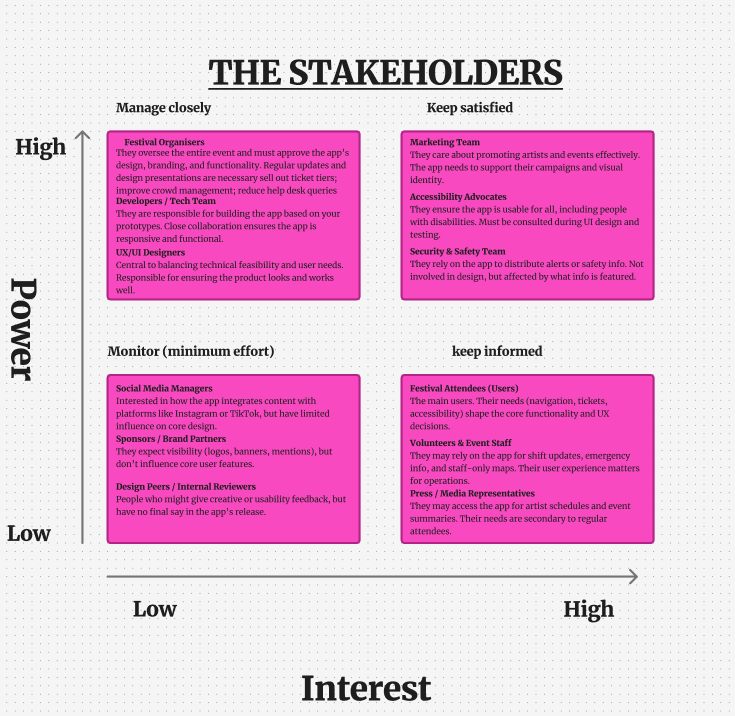
This stakeholder table helps me focus on the right people at the right time during the development of the Rock in Rio app. By identifying who to manage closely, who to keep updated, and who can be monitored at a distance, I can structure the design process to balance user needs with organizational goals—making the final product inclusive, usable, and effective across all user types.
WIREFRAME
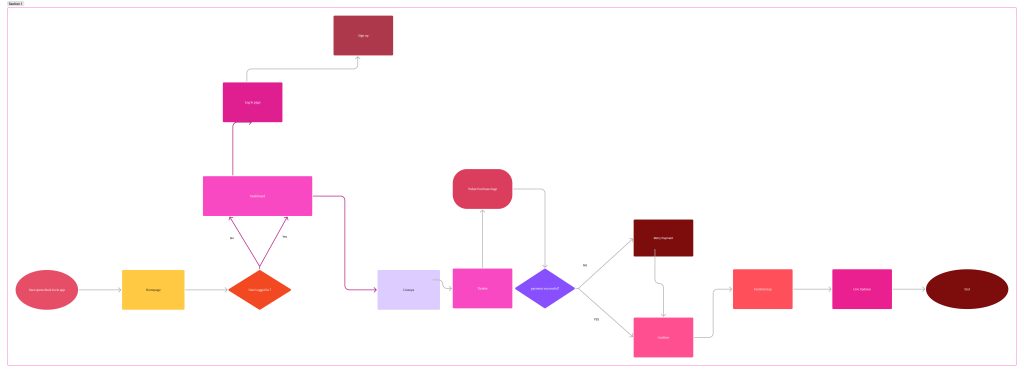
The most precise timeline of events that guests would follow is created using wireframes, which aids in extending specific features and determining how well the user interface (UI) guides users around the website. Based on the guests’ interests, I attempted to forecast how they would navigate the website, identify any areas that would cause visitors to become frustrated or confused, and come up with solutions to help them create the least troublesome experience possible. In order to make sure that every stage of the purchasing process accommodates consumers and establishes a natural flow that will subtly direct users towards their objective regardless of their level of tech knowledge, wireframing has assisted in thoroughly considering every UI element.
REFRENCING LIST
- Müller, K. (2020) Understanding Festival Demographics: A Case Study of European Music Events. Journal of Cultural Marketing, 15(2), pp. 101–117.
- Glastonbury Festival (2024) Official Glastonbury Website. Available at: https://www.glastonburyfestivals.co.uk/ (Accessed: 12 July 2025).
- UX Planet (2023) What Music Festival Apps Get Right (And Wrong). Available at: https://uxplanet.org/music-festival-apps-review (Accessed: 12 July 2025).
